Easter Sunday
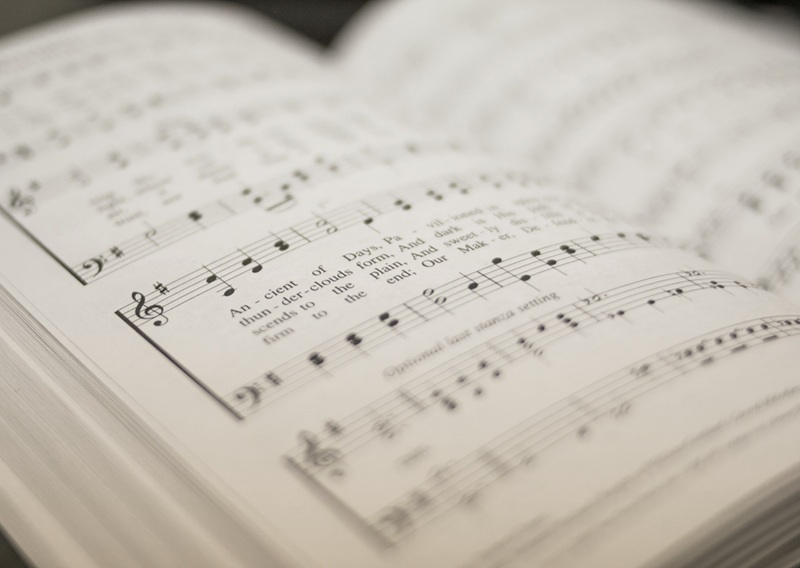
If you’ve been a member of a Baptist church for more than a decade or two, you might remember the “worship wars” spanning a few decades a while back.
During the worship wars, battle lines were drawn based on what kind of music you felt was appropriate during the weekly gathering of the church. Should we be singing “hymns” (defined as older, more familiar songs published in a hymnal), or “praise and worship,” (songs composed more recently in a popular style)?
Looking back, it seems kind of silly, doesn’t it? We were really willing to damage the unity of the church over something as petty as musical preferences. Not our finest hour.
Of course, music was just a superficial symptom of a much more serious set of questions during the worship wars. For example, “What is worship?” What does that word even mean? It’s one of those concepts that seems intuitive until you try to define it. I’ve noticed over the years that arguments over musical styles and other elements of a church gathering really boil down to that question.
To take matters further, “Who gets to define what constitutes worship?” Does God give us a general idea and then expect us to creatively figure out the rest? Or should we limit ourselves to the activities and attitudes of worship explicitly commanded in Scripture? How a church answers this question has dozens of practical implications for the way we conduct our gatherings. Much of the diversity between one church and another stems from different answers to this question.
Or consider a third question: “Who is worship for?” This is kind of a multiple choice question, and it’s led to a lot of unnecessary arguments. Here are the choices: A) Worship is for God. B) Worship is for believers. C) Worship is for unbelievers.
When I was a teenager, I spent a lot of time volunteering with our church’s bus ministry. It was a whole series of programs that ran parallel to other church activities each Sunday morning. All of our effort was focused on one thing: Getting more kids to ride the bus, hear the gospel, and make professions of faith. Our entire program was geared toward unbelieving kids, and that commitment controlled our other choices: It’s the reason we had so many games, skits, prizes, treats, and gimmicks. The more fun the kids had, the more they invited their friends. Our gathering—our worship—was primarily for unbelievers. Frankly, many churches operate the same way. Zealous for the mission, they gear every activity toward reaching the lost, even Sunday morning worship.
At a certain point, I realized that our worship wasn’t correctly calibrated. I heard compelling arguments based on Bible passages that worship should really be for God. After all, isn’t the point of everything to glorify God? When the angels and elders and multitudes gathered for worship in Revelation 4 and 5, isn’t God’s throne at the very center of the scene?
Others have argued that when we gather for worship, we’re really gathering to build up one another. That is, worship is for believers. Think about the way Paul speaks in 1 Corinthians 11. He asks us to consider how our activity in worship either builds up or tears down our brothers in Christ.
But do we have to choose either A, B, or C? When you’ve visited churches that insist on one of these choices to the exclusion of the others, do you think they’re really being faithful to the expectations laid out in Scripture?
The fact is that there is fourth answer: “D) All of the above.” When we worship, we gather in God’s presence and respond to Him as He reveals Himself. Since we’re responding to God as He is, we don’t just make stuff up. We approach Him with reverence, awe, gratitude, and love.
Since we’re gathering together in God’s presence, we seek to build each other up. Essentially, we encourage each other to see God and respond in faith and obedience. This edifies the saints and exalts the Savior.
But there are others present too: those who do not believe. We ought to keep them in mind as well. The apostle Paul certainly does (see 1 Corinthians 14:24-25). Do they understand what’s being said? Are they confronted by the holiness of God? Challenged by the love of God’s people?
This Sunday is Easter Sunday. Combined with Mother’s Day and Christmas Eve, it’s one of our greatest opportunities to show Christ to our unbelieving neighbors and friends who decide to join us just for one day. I hope you’ll join me in praying for these folks we don’t typically see. I hope you’ll make an extra effort to welcome them the way Christ welcomes us. Park a little further from the door. Sit in the middle of the row. Smile and introduce yourself. Leave your Sunday schedule loose enough so that you aren’t frenzied and frazzled when the Lord gives you an opportunity to meet a guest. You never know how God might use a little kindness to bring another worshiper into the family of God.
More in Weekly Articles
October 13, 2026
Missions BanquetOctober 6, 2026
Family WorshipSeptember 29, 2026
PPBA Annual Meeting