Why Plant a Church in Mineral Wells?

A Burden for the Unchurched
For about the last seven years, the Lord has been stirring up a burden in my heart around a specific need in Mineral Wells. I believe one way to address this need is to start a new church that is biblically sound, outward facing, discipleship-minded, and most importantly, intentionally accessible to normal folks. I believe that’s going to take us setting out to purposely break down any superficial thing that could serve as a barrier to a regular, unchurched person walking in the front door and intentionally crafting opportunities for unchurched people to form relationships with Christians (and vice versa). The Apostle Paul wrote in 1 Cor. 9 that he had: “become all things to all people, that by all means [he] might save some.” This does not mean compromising on the truth. This does not mean changing the Gospel messaging in anyway. It does mean reconsidering the value of every superficial, cultural element of the regular church experience, and filtering out what is not biblically necessary, all for the sake of welcoming people who might feel out of place in a traditional church environment. The idea is to welcome people in such a way so that their negative preconceived ideas about church are able to be put to bed from the outset. Simply put, we want to let the experience of a church culture deeply informed by the gospel have the first word to speak for itself. This is the exact work I’ve been dreaming about and preparing for through various means over the course of many years, including seminary education, cohort trainings, personal coaching, and mentorship with other church planters.
Who Are the Unchurched?
One quick note: We’re talking a lot about “unchurched” people. That word may evoke a specific stereotype of the most extreme possibility, but unchurched people abide all across the socioeconomic spectrum. This could be a guy with prison tattoos who spent time in the pen and is trying to figure things out. It could also be a pharmacist who grew disenchanted with the church and slowly disengaged along the way. Unchurched people come in all shapes and sizes, but they have the same thing in common: They need to experience the Gospel in the context of healthy church community.
The Plan
But how are we going to pursue this? Unfortunately, there is no proprietary secret formula that we’ve discovered to magically reach people. Through ongoing coaching via the SEND Network, I’m still developing specifics, so this will become more robust and precise as the days go by, but here’s our plan so far:
- Pray regularly and on purpose. Vance Pitman said: “We don’t pray before we work. Prayer IS the work.” We’re in the process of nailing down the specifics of our prayer plan with coaching from the SEND Network, but basically it looks like this: Daily, weekly, monthly prayer opportunities with varying degrees of structure. Daily occurs at 2pm with regular, repeating prayer prompts corresponding to each day of the week. Weekly prayer walks around target neighborhoods in which we pray for certain outcomes and ask the Lord for opportunities to meet people. Monthly guided prayer meetings when we join together corporately to beg the Lord to move in the city.
- Keep a minimal church calendar with intentional breaks in church activity built in. I know what you’re thinking: Shouldn’t we do more if we want to reach more people? Most church activity is focused on serving the needs of the members of the church (understandably). It’s hard for church people to form meaningful relationships with unchurched people if all their time and bandwidth is filled with extra church activities.
- Community groups that invite newcomers and serve others. Community groups function as the side door of the church (Sunday mornings being the front door) that will be a neutral, low-pressure space to invite new people in to. Every member is expected to be on the lookout for opportunities to serve their neighbors. One group meeting every-other month is dedicated to serving the person that the group comes up with.
- We like to party. Once every other month, we’ll have an “all groups” party. This is literally just a big hangout with no lesson or agenda, just a time to come together and enjoy each other—and another neutral space to invite in outsiders as an opportunity to begin forming relationships. There’s a sense in which the discipleship process starts as soon as you meet a person. Relationships are also the primary reason that a person shows up and sticks around. That’s also the most natural way regular people will get involved in something out of the ordinary, like church life—which is foreign to most. Besides that, we’ll encourage our people to coach sports teams, help at local schools, and engage with local events and organizations. We’ll also have regular Sunday morning worship gatherings that are as visitor-friendly for non-church-people as we can make them, while remaining as Gospel-centered as possible. Overall, it’s just a different way of thinking about the structure of a church, with lots of consideration given to how we might welcome regular people into relationships that bear fruit for the Gospel.
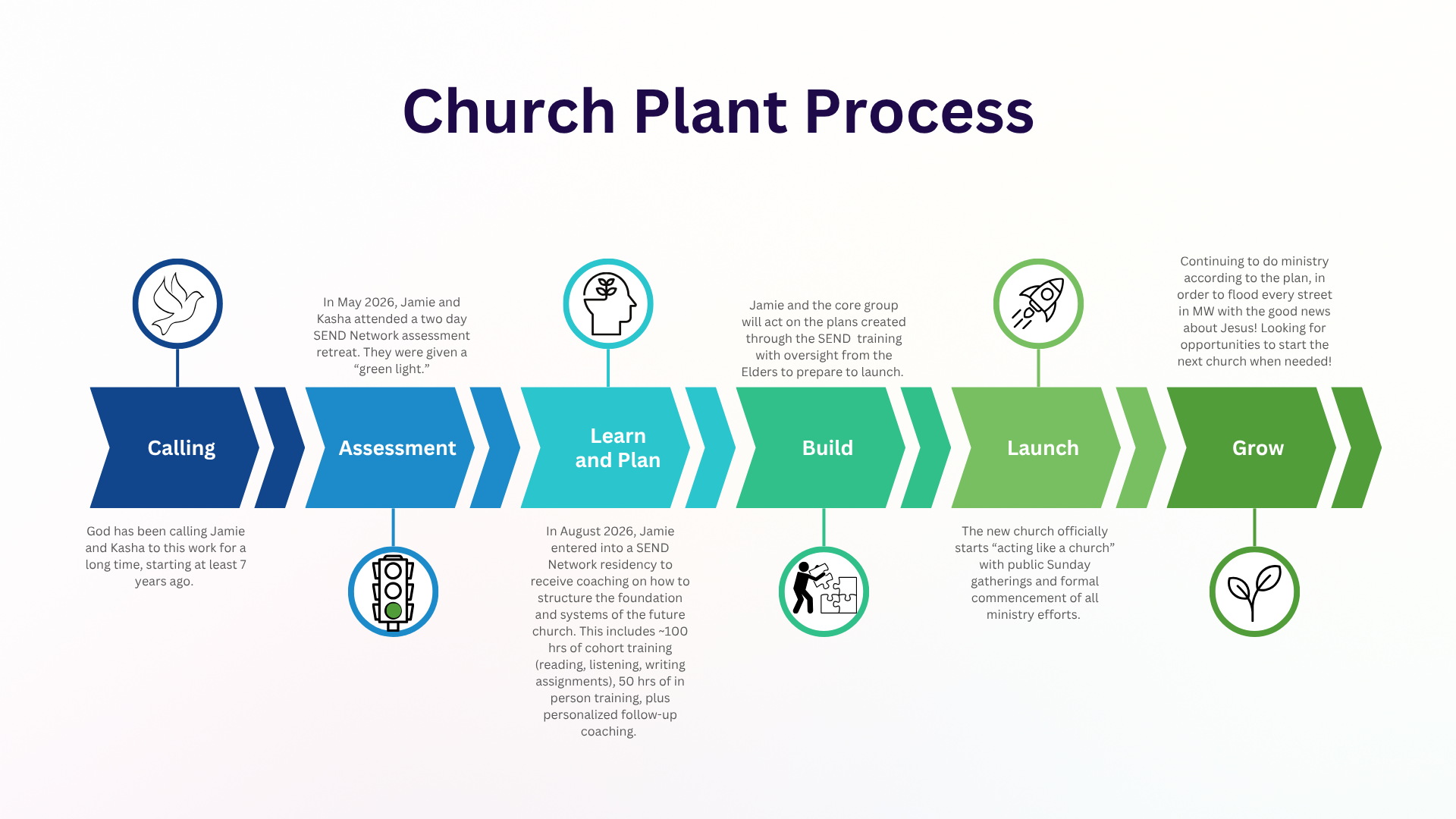
The Process
More in Weekly Articles
October 13, 2026
Missions BanquetOctober 6, 2026
Family WorshipSeptember 29, 2026
PPBA Annual Meeting